One of the legends who paved the way for African football to the mainstream media. A player who had such belief in his talent from as early as 16 years old. Given the name “Pele” due to his immense talent and skill on the pitch, he impacted the game at any given moment. Abedi Ayew Pele, possibly the greatest player to ever play for Ghana.
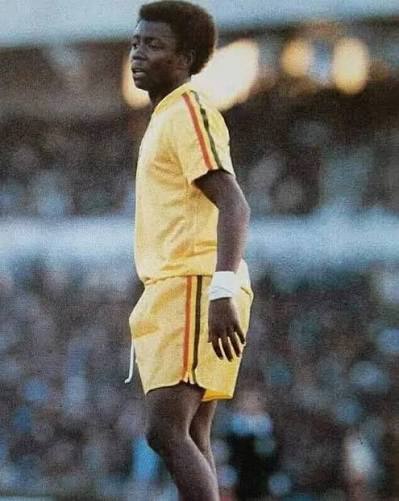
Abedi’s journey to success wasn’t easy, having travelled to Europe during the early 1980s due to Ghana’s political crisis. The future of the nation felt unstable, with four governments in a decade, repeated military violence and an economy in tatters. For many young Ghanaians, their dreams were held up by a nation that couldn’t guarantee its people’s safety, stability or opportunity. Abedi saw this as the best way to throw all he had into football in hopes of succeeding.
Once he arrived in Europe, it was a whole new world, a new language and unfamiliar surroundings. But comfort was not at the forefront of his mind; it was the pursuit to make a name for himself.
Abedi, having already established himself as a talent back home in Ghana, showed glimpses of greatness for clubs like Tamale United and Hearts of Oak, some of the biggest clubs in the country, and it is from where the nickname “Pele” originated. The creativity and confidence were something to behold, despite not being physically dominant, his ability to control games via his intelligence and technique.
By the time he landed in Europe, the nickname stayed with him. Despite having moved to several different clubs at such a young age, it exposed him to different systems, languages and expectations. Abedi himself has repeatedly stressed that the nickname “Pele” carries a lot of weight, understanding that the legacy of the iconic Brazilian being placed on a young Ghanaian talent means you must play at a certain standard to earn that name.
Marseille was when Abedi Pele’s career finally found clarity. Having joined the club in 1987, he was part of an ambitious project, desperate to dominate in all the competitions they were playing in. The Marseille coach Bernard Tapie demanded winners, not just talented prospects.
Abedi was a key figure for the French side, operating as an integral playmaker in a league that was becoming increasingly more physical and tactical. Amongst a team full of iconic players like ballon d’or winning Jean Pierre Papin, iconic Marcel Desailly and leader Didier Deschamps, Abedi managed to show his qualities amongst these legends.
But despite all of this, Abedi’s position at the club was not solidified. The club was driven by immediate success and constant pressure to win; even decisive players were dispensable. Abedi was someone who could thrive with responsibility and be a key player; the lack of trust was stifling.
The move to Lille was a place for him to announce himself truly; the spotlight of a big club was finally off him, and he could finally play with the freedom he had desired, carrying a team that relied on him. The goals. The assists. And the leadership. Everything went through him; he was a complete force, a player who decided games on his own.
His time at Lille was not about winning individual awards or challenging for the biggest trophies; it was about having that authority. Away from the spotlight, Abedi thrived and was shaping him into someone who would soon dominate football on the biggest stages.
Once Marseille started noticing Abedi Pele’s glimpses of greatness, it was only a matter of time before they went in for him again. Abedi, in an interview, mentioned that “Many clubs came in for him,” one of those teams being PSG, but when making his final decision, his wife advised him to go back to Marseille, to show them the quality that they missed.
His return was iconic; he returned as a player who knew his worth, and he became the heartbeat of the French side built to conquer Europe. Between 1990 and 1993, Marseille won three league titles consecutively, whilst players like Papin took the headlines for his goalscoring, it was Abedi Pele’s creative spark that allowed for those opportunities to score.
Abedi Pele’s performances in Europe not only signalled that African players can not only compete at the highest levels but also lead. In 1993, the club made history, becoming the first French club to lift the Champions League after beating AC Milan in the final. These years spent at Marseille earned him the African Footballer of the Year three years in a row (1991,1992,1993), as a reflection of when talent meets years of experience and commitment to the game.

The Ayew name in football didn’t stop with him. His brothers were footballers at the professional level, particularly Kwame Ayew, who represented the Ghanaian national team and played for multiple clubs in Europe.
The legacy became even more remarkable through his children, Andre Ayew, Jordan Ayew and Ibrahim Ayew as they all followed their father’s pathway playing professional football. Andre Ayew captained the under-20s Ghana national team to an AFCON trophy, Jordan built his own identity as a well established premier league player through his resilience and longevity, and Ibrahim reached the professional ranks too, further proving how deep football ran through the family’s DNA.

Abedi has always spoken about the values you must carry when pursuing a footballing career; humility, discipline, and respect for the game are essential qualities to possess. The Ayew name is a living example of what happens when those values are passed down from generation to generation. Abedi Pele’s legacy and influence did not simply end with Marseille or Ghana; it stretched far beyond that. It bred the next generation of African footballers, and now look at him as an example of what we can achieve on the biggest stage of the game.


Leave a comment