
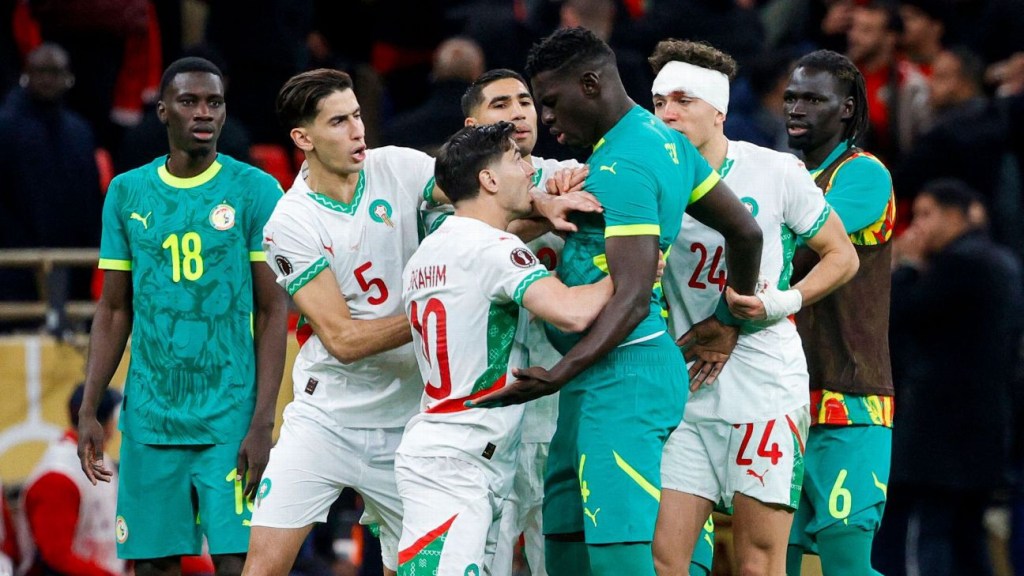
Enough time has passed. I needed that time to step back and ask myself, “Was this the fan in me speaking, or the journalist?
Now that the dust has settled, my thoughts are clear.
This situation is an absolute disaster.
To overturn the outcome of a major international final more than two months after the result is more than just an eyebrow-raiser; it’s indefinite damage to the credibility of the competition. The African Cup of Nations has long battled narratives that undermine its legitimacy in the global game, and decisions like this only add fuel to the fire.
The immediate question for many fans is simple:
Would this ever happen in European football?
Would a final in the Champions League be revisited and overturned weeks later?
Realistically, no.
Not because European football is immune to controversy, but because there is an understanding that results in finals must carry a level of finality. Once that line is crossed, the integrity of competition begins to blur.
That is where this situation becomes deeply concerning.
Reports surrounding the final between Senegal and Morocco suggest that the decision stems from regulatory breaches, specifically about the number of players on the pitch. On paper, rules exist for a reason. Governing bodies must uphold them to keep fairness.
But football does not purely exist on paper.
It exists in moments, in emotions, in the lived experiences of players and fans who invest everything into these occasions. A final is not just a fixture; it is a buildup of years of preparation, sacrifice, and national pride.
To retroactively alter that outcome is to rewrite history.
That is where the line should be drawn.
It’s not about ignoring rules or excusing potential violations. It is about timing. If issues like this existed, they should’ve addressed them immediately, not weeks later, when the moment had already passed, and the damage had become irreversible.
Voices within African football have consistently called for greater respect for the game. This decision risks undermining all the years of progress.
It places the competition back in a position where its governance is questioned, rather than celebrating the football.
And that is the real disappointment.
AFCON has never lacked quality, passion or significance. What it has lacked is consistent structural credibility in the eyes of the broader football world.
Moments like this matter. Not for Senegal or Morocco, but for the perception of Africa as a whole.



 Beyond the Pitch
Leave a comment