
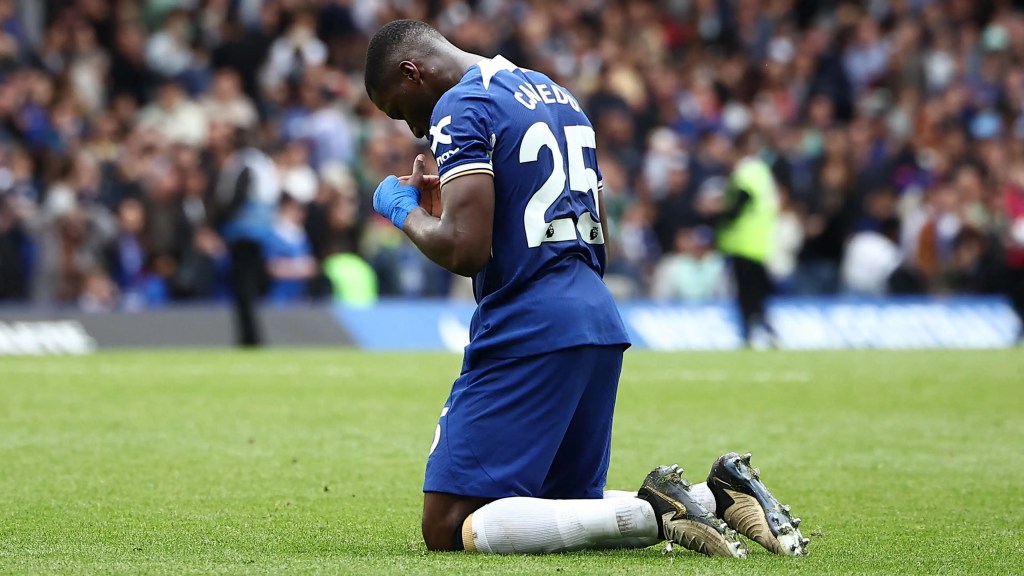
Athletes spend most of their lives working tirelessly to reach their dreams, and their faith is often the centrepiece of what drives them through the long nights, the injuries, and the pressure. Many players look up to God once they’ve scored, acknowledging that without Him, none of it would be possible.
But what we see, the celebrations, the prayers after victories or defeats, are just a fraction of what their story truly is. In an age where image and sponsorships define careers, speaking about your faith can be seen as a risk. Some, like former Liverpool manager Jürgen Klopp, admit that being a Christian can feel like “a problem,” not due to shame, but because faith and football struggle to share the same spotlight.
It makes you think, in a culture that encourages authenticity, why do many feel the need to hide parts of themselves from the world?
Religion is something that can cause division; unfortunately, if you are of a different religion or denomination, someone will have an opinion or feel the need to express their own views on what that faith teaches.
Isn’t that a contradiction to what being religious is?
“Judge not, that ye be not judged”- Matthew 7:1
This verse has always stood out to me. Faith should not divide but unite. However, we find ourselves in an era where people go straight to questioning what you believe in rather than trying to understand why you believe it. From my personal perspective, I have seen both inside and outside the church a tendency to separate rather than to support.
The same thing happens in sport. When a player puts in an exceptional performance and then kneels to pray to God or even gives thanks to Him in the post-game interview, it can divide opinions.
Some say it’s humility. Some say it’s performative.
For many athletes, that moment is everything; it’s their way of acknowledging, “None of this could have been achieved alone.”
Premier League stars Bukayo Saka and Mohammed Salah both express their beliefs openly and respectfully, yet people do not receive them in the same way. Saka’s a devoted Christian man, pointing his fingers to the sky or falling to his knees in humility to give thanks to God. It is subtle and widely accepted amongst the football world. With Salah, a devoted Muslim man, prostrating after every goal, performing sujud as an act of worship. The same gesture that connects with millions across the world, yet still receives unwarranted criticism in the media.
Then you have UFC legend Khabib Nurmagomedov, who’s never shunned away from faith, and how integral it has been for him and his career. After laying out opponents, he’d first thank Allah, not paying mind to the fame and success, as he believes that none of it would be possible without the support and love from Him. Then comes the inevitable reality of the world we live in; people label him as being “too outspoken” for it.
Why is it that showing belief is usually accepted when it fits a certain narrative or faith?
It shouldn’t be this way. Faith is intended to ground us, which includes the very athletes fans idolise. The way society reacts to each expression of faith these athletes show says more about us than it does about them.
Faith is not about putting on a show; it’s about laying a foundation. It acts as an anchor for whenever someone is going through hardship or whenever someone is thriving.
The constant reference point is their faith. If we, as fans, can celebrate athletes for their talent, why can’t we celebrate them for their truth, too?
Faith in sport doesn’t have to be about “making a statement,” it should send a message about staying grounded. When you next see a player pointing up to the sky, bowing down, or falling to their knees to pray, remind yourself that it is not always going to be for show. They are silently fighting a battle that they’ve finally won.

 Beyond the Pitch
Leave a comment