
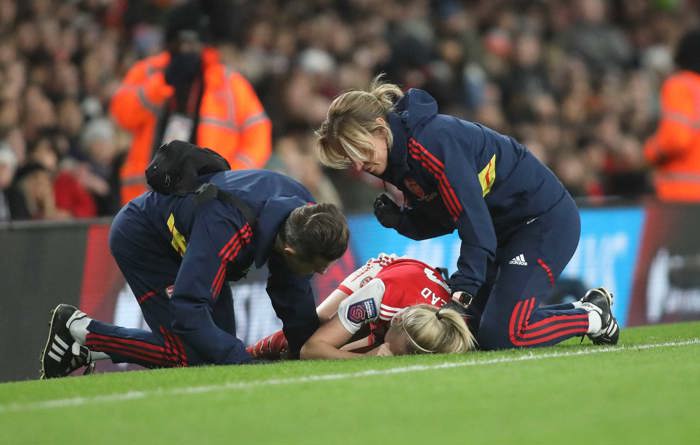
Progress lost, anger and frustration seep in, forced to be sidelined week in and week out, countless depressing rehab sessions, asking yourself, “Will I really make it back stronger?”
The constant battle of emotions running through an athlete’s head during this process is enough to make anyone lose it, enough to let out a scream of agony, knowing there’s nothing you can do to play the game you live and breathe for, the sport you’ve grinded towards, all on pause due to the big “I”.
When you are sidelined for so long, you don’t just miss playing the games; you miss the sense of belonging. The people around you sense that you’re changing, sense that you are left figuring out how to fill the void left behind.
Injuries test the character of an athlete; it’s a test of patience, determination, and, most importantly, humility. ‘Why humility?’ you may ask. One thing, especially for athletes, is that a dream can be easily taken away from you by unfortunate circumstances at any given time.
By 2025, we are blessed to have advanced technology to assess the possibilities of an injury occurring and the procedures required to avoid said injury. But the inevitable may still come; humility is key because it always allows you to perform to your highest abilities, knowing this will not last forever.
For some athletes, this truth comes far too early. My friend Albion suffered an ACL injury that required surgery, forcing him to spend months away from the game he loves. What began as a single moment on the pitch transformed into a recovery process filled with frustration and doubt alongside the painful rehab sessions. His story is a reminder that an injury just doesn’t sideline your body, but challenges your identity, patience, and fight every day on your road to recovery.
As an athlete, the one thing you don’t want to feel is knowing you didn’t live up to your true potential. Grant Hill, a former NBA star, was on route to a Hall of Fame career playing for the Detroit Pistons, which was stifled by never-ending ankle injuries for a 4-year period; which ultimately ended his Hall of Fame chances.
There’s a thin line between the ‘Inevitable v Preventable’ aspect of injuries, especially in this era where everything is so advanced when it comes to managing injuries, you’d expect there not to be much room for error when advising players on what they should be doing to prevent injuries.
The usage of GPS trackers that monitor their workload for their personal recovery programmes alongside nutritional plans to get the players to optimal fitness when they step on the pitch.
Yet, despite the data and preparation involved, injuries are still happening. Whether it’s a misstep, a heavy impact landing, or a lapse in concentration during gameplay, it will contribute to unfortunate setbacks for the player. In football, ACL injuries are the most common setbacks for players, and studies show they account for 20% of all time lost to injury at the professional level.
For an athlete suffering an ACL, having gone through the correct procedures to avoid injuries and still finding yourself out for the season, which will have a huge mental toll on anyone at any level, asking yourself, ‘What went wrong?’, sometimes injuries are just unavoidable.
The WSL star Beth Mead suffered an ACL injury in late 2022, after having leading England to Euro 2022 glory and winning the golden boot in the competition. The timing couldn’t have been worse, as the 2023 World Cup denied her the opportunity to replicate the form she had in the tournament prior.
Mead’s rehabilitation had been mental warfare; she has spoken openly about the frustrations she has faced, watching from the sidelines, and the difficulty of staying positive while gradually rebuilding her body. Even with the world-class medical staff and the latest sports science provided to her, the recovery requires resilience and patience.
This is a reminder that ACL injuries will derail anyone’s progression in sport, whether grassroots or professional. Mead’s absence showed just how fragile even the brightest careers can be when the inevitable setbacks of the sport take over.
Injuries will always be a part of the sport. For the athletes, the challenge will not just be the physical recovery but the mental resilience you show in that process, which will ultimately have an impact on how strong your comeback will be. In the end, it’s the balance between inevitability, prevention, and perseverance that will define the true will of an athlete.


 Beyond the Pitch
Leave a comment