
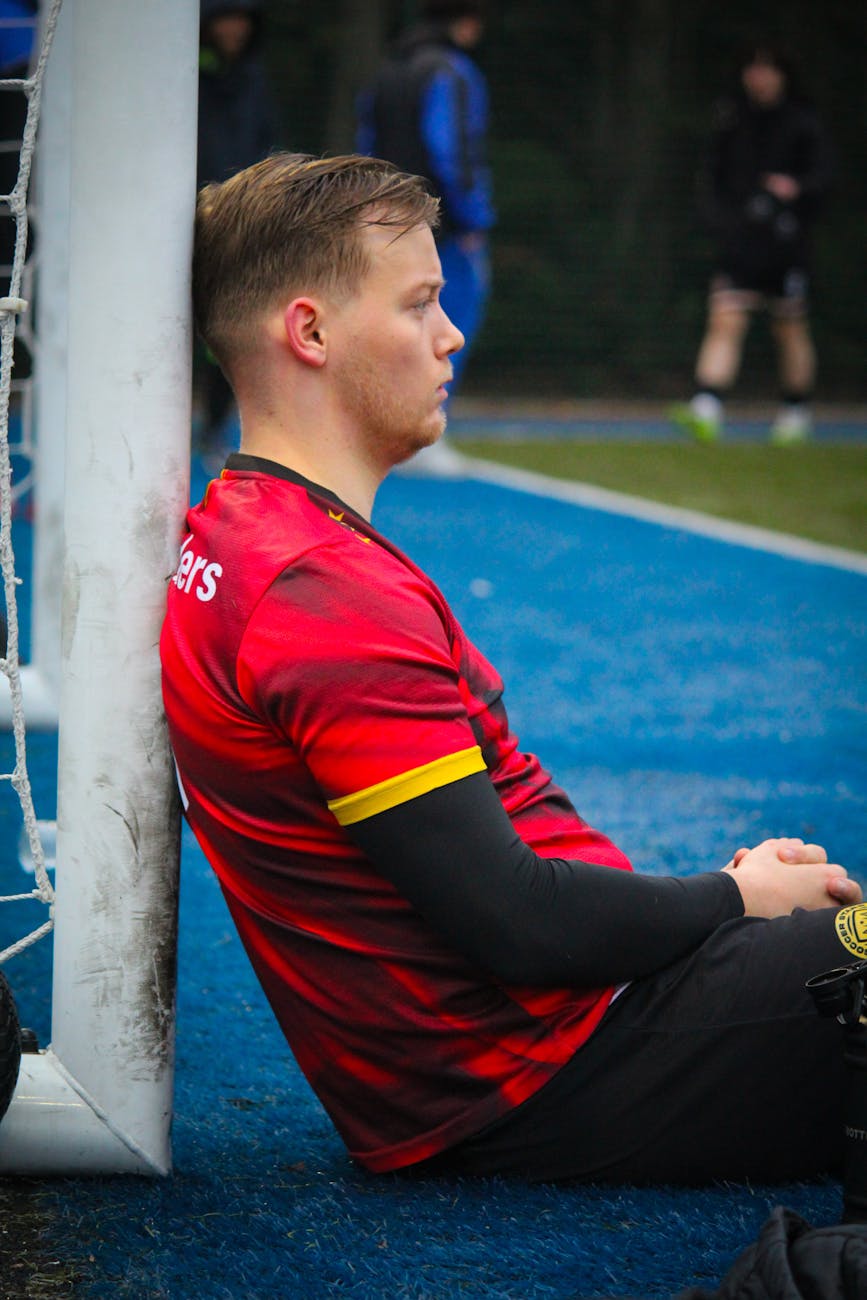
The world faces the problem of the youth not being able to voice their mental health issues, which affects everyone in some way. The World Health Organisation says 1 in 8 people globally live with a form of mental health issue, things like anxiety and depression are the most common, and modern societal pressures and crises like COVID-19 have heightened these cases.
The World Health Organisation also mentions that the global economy loses over £1trillion every year in productivity due to depression and anxiety disorders. This burden is significant in professional sports, seeing as you are expected to produce high-level performances consistently.
When discussing the issues of mental health socially, it can lead to discrimination, isolation, and exclusion, which contribute to the youth being unable to talk about their difficulties with their mental health.
For the youth players who try to make their way up in the football ranks, they must now sacrifice so much of their time trying to compete against hundreds and thousands of young talents, all to reach the highest level of the game.
In this current day and age, people tend to disregard the mental challenges that the youth tend to face when they go through this process of pushing themselves to the limit daily. When a youth player gets released from a club, the toll it takes on them would be huge, as all they’ve worked they would think would be for nothing.
Another huge trial that these players face is long-term injuries that keep them out for a long time, anxiety, and depression are things that will seriously impact these players because they’d be unsure about whether they get back to the level they were playing at previously.
The feeling of isolation is something that is not discussed when you have a long-term injury; you tend to feel disconnected from your teammates as you are focusing on your rehabilitation, and you could risk not having a social life, too.
There are legends of them who had struggled with mental health whilst climbing the ranks of football, one being Andreas Iniesta as one of his closest friends passed in 2009 and of course playing for Barcelona especially during that era there was a standard expected for you to uphold in terms of performances, thankfully for him he was able to persevere during this difficult time in his life and eventually become a legend at the club.
For academy player Jeremy Wisten, it was much more serious for him as the 18-year-old was playing for Manchester City, and after being released, he was going through serious struggles with his mental health. Unfortunately, the young man took his own life due to this.
This raises the point of whether there is good enough aftercare for the academy players when they do get released from their clubs. Premier League clubs are now expected to provide support for their released academy products, which would include career advice, mental health counselling, and pathways into further education or employment that would interest them.
High-profile clubs have increasingly provided access to mental health resources for the academies, and psychologists have been employed by the academy systems to make sure the players are not too overwhelmed by their situations.
The Heads-up initiative started by the FA aims to break the stigma around mental health in football, which encourages these youth players to actively seek out help when struggling with their mental health.
There has been more of an emphasis on these clubs, making sure these players are doing their education alongside the football, as it helps with there being options afterwards, and it generally keeps them grounded, as it’s a way of not only focusing on the sport that’s taking up most of your time.
The research into players’ well-being has been a focus area as it helps identify the risk factors and improve the support systems. This helps the clubs in their reviews for their academy players, which is a policy that they need to carry out now.
High-profile players have taken this opportunity to voice their experiences on their own mental struggles they’ve faced climbing the ranks in the game, players like Marcus Rashford, Tyrone Mings, and Danny Rose. Them just opening up about their own issues will be a huge encouragement for the youth players to have the confidence and open up about their mental health, too.
There have been partnerships with organisations like the PFA, Sporting Chance, and Mind; they’ve been working with clubs in order to provide resources and workshops for the youth players.
The family of the players will be very crucial in making sure there is that emotional support for the difficult moments in the players’ lives. There have been programs for the families to take so that they will be educated on how to navigate the pressures of academic life, especially if they have been released.
Although there have been tragic cases for certain players, there are also some who have managed to fight through the struggles of being released by the clubs they were at. A famous example of this is when Harry Kane was released by Arsenal at the age of 8 years old after being told he was too small and unathletic.
Hearing these things at such a young age would’ve been difficult and would affect anyone at that age; however, this motivated the young Harry Kane as he worked tirelessly trying to improve his game once he’d move to North London rivals Tottenham.
After loan spells at different clubs, he eventually was given the chance to show his ability and is now considered one of the all-time great Premier League strikers, and to top it, he became the captain of the national team.
The England star man opened up about when he was released, “When people doubt, you have to use it to your advantage. It’s up to you to prove them wrong”.
The comments from Harry Kane is proof of how much of how mentally strong you need to be to become one of the very best in football, however, not everyone can take the criticism and being told that you are not good enough and to then turn it into motivation, every youth player needs an arm around them, no one wants to feel worthless at such a young age.
Today in football, the managers and coaches have recognised the pressures of playing for these youth academies. Pep Guardiola voiced his opinion on this, saying, “Young players have a lot of pressure now- social media, expectations, comparisons. We need to protect them and make sure they grow not only as players but as people.”
The part of making sure they grow as “people” holds so much importance, as all the mental pressures and expectations the youth players face are bound to help them for whatever they go on to do.
The families and local communities can play a huge role in supporting players who face pressures in football. A high-profile example of this would be the Euros 2020, where Jadon Sancho, Marcus Rashford, and Bukayo Saka missed the penalties for England in the penalty shootout in the final.
They had to endure endless backlash online with a lot of racism coming their way, which no one should go through. Understandably, this would have affected their mental health in a big way, especially Bukayo Saka, being the final penalty taker and being only 19 years old at the time in his first major tournament.
The teammates naturally stood by these players during this difficult period for them due to the volume of backlash they were facing after the tournament. In Withington, Manchester, there was a mural created for Marcus Rashford, but there were racial slurs put on it after the final; however, red love hearts were put over it with words like “hero”, “role model”, and “adored” to show support to the English star.
To conclude, addressing the mental health of youth players is not only about fostering better athletes but building resilient individuals who can understand and deal with the pressures of playing this sport. Creating a culture of openness through mental health resources at these clubs’ football can lead the way in making sure young men can thrive in this society.
As the challenges of the game evolve year by year, prioritising the well-being of these players will become essential to being successful on and off the pitch. Doing this upholds the integrity of football as a sport that encourages growth, community, and support.






 Beyond the Pitch
Leave a comment